Two Versions of Celestial Symphony, One Great Sage
A brief note for readers unfamiliar with Chinese culture
Journey to the West is one of the Four Great Classical Novels of Chinese literature. Written in the 16th century, it tells the story of the legendary pilgrimage of the monk Xuanzang and his three disciples, the most famous of whom is Sun Wukong (also known as the Monkey King or the Great Sage Equal to Heaven), one of the most iconic and beloved characters in Chinese culture.
The 1986 television adaptation became one of the most beloved TV series in China. Its opening theme, Celestial Symphony, has since become one of the most iconic and recognizable pieces of music in modern Chinese culture.
Nearly four decades later, the critically acclaimed action RPG Black Myth: Wukong reimagined this classic tale for a new generation. Its ending features a newly arranged version of Celestial Symphony, transforming the same melody into something dramatically different in tone and emotion.
This article is less about music than it is about Wukong himself—how one melody came to portray the same hero before and after his journey to the West.
Recently, I revisited two versions of Celestial Symphony.
The original version is the iconic theme from the 1986 television adaptation of Journey to the West. Listening to this makes me want to be a god in the celestial palace.
The new version appears in the ending of Black Myth: Wukong. Listening to this makes me want to fight the gods and rise up against the celestial palace.
When I first listened to them side by side, I was struck by how different they sounded. The 1986 version is light, playful, and free-spirited, while the Black Myth arrangement is solemn, weighty, and filled with power. One feels like a child soaring freely between heaven and earth; the other sounds like a battle horn echoing across a battlefield — resolute, thunderous, and majestic.
Yet the more I listened, the more I realized that they are telling the same story.
The Original — Fearless Before Heaven and Earth
Many people regard the 1986 Journey to the West as a treasured childhood memory, and I certainly feel the same way. But what moves me most about Celestial Symphony is not nostalgia. It is the spirit that the music embodies.
The original theme does not portray the all-powerful ‘Great Sage Equal to Heaven’ that we later come to know. Instead, it captures a young monkey who has just leapt out of Mount Huaguo. He is curious about the world, longs for freedom, believes in justice, and instinctively feels that the world ought to be better than it is.
That is why he dares to wreak havoc in Heaven, challenge authority, and say “no” to anything he finds unreasonable. He fears neither Heaven nor Earth. There is something deeply youthful about him — the fearless confidence of someone who has not yet learned to be afraid.
The New Version — Suffering and Transformation
The Wukong portrayed in Black Myth has undergone a profound transformation.
He has experienced oppression, loss, and hardship. He has walked the long and lonely journey to the West. He has seen through the hypocrisy of gods and Buddhas, rebelled once more, and failed once more. He has learned that reality is far more complicated than he once imagined, that resistance comes at a cost, and that the world rarely unfolds according to one’s ideals.
In this sense, Black Myth: Wukong no longer depicts the carefree spirit and youthful exuberance of earlier days. Instead, it presents the determination of an adult — weathered by suffering, yet still resolute and unyielding.
What Changed, and What Did Not?
On the surface, these seem like two entirely different Wukongs. One is innocent, the other mature; one is light, the other heavy; one has only just begun his journey, while the other has already traveled a long and difficult journey.
But upon closer reflection, I do not think they are truly different.
Both long for freedom. Both believe in justice and fairness. Both believe that the world can and should be better. And both are willing to pay the price for those beliefs.
When we are young, we tend to see the world as beautiful as Mount Huaguo. As we grow older, we discover that life is not always so kind. We experience loss, regret, confusion, and struggle. We come to understand the complexity of reality and the unpredictability of fate. Growing up often feels like watching one illusion after another shatter.
But true growth is not about forgetting who we once were, nor is it about becoming numb. True growth means recognizing the world’s complexity while becoming even more determined to cherish and believe in goodness. It means seeing deception and corruption, yet still choosing, without hesitation, to walk the path one believes is right.
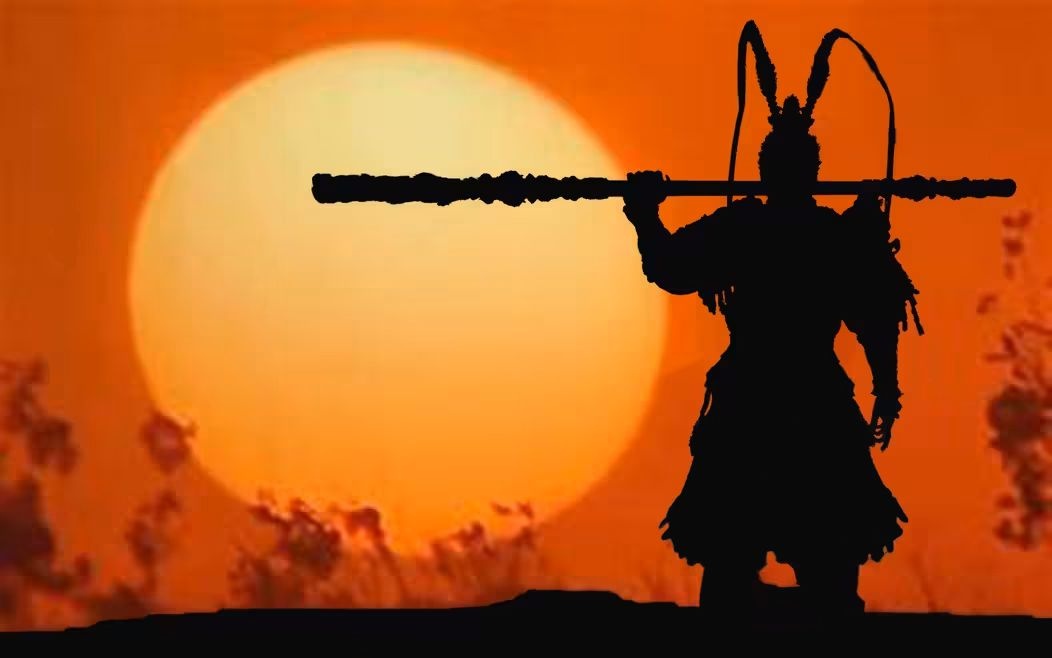
From this perspective, the Great Sage in Black Myth: Wukong is not a different Great Sage. He has simply finished his Journey to the West.
That little monkey who once gazed up at the sky never disappeared. He endured storms and hardships, but he never forgot why he set out in the first place, nor why he first raised the Jingu Bang. And rather than stopping, he chose to raise it once again.
When I listen to these two versions of Celestial Symphony together, I do not hear two different Wukongs. I hear the same Wukong at different stages of life.
Perhaps that is why both versions move me so deeply. No matter how times change, we continue to be drawn to the same ideals: the longing for a better world, the commitment to justice and fairness, and the courage to refuse to bow before darkness.
As a child, I admired Sun Wukong because he was powerful. Looking back now, I realize that what truly matters is not his Seventy-Two Transformations, his Jingu Bang, or any of his magical powers. What makes him remarkable is his unwavering pursuit of freedom and his refusal to accept injustice.
He changed in many ways.
And yet, he never changed at all.
Neither did I.
Comments